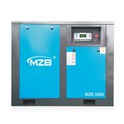

Hey there! As a supplier of Belt Driven Air Compressors, I often get asked if these compressors can be used to power air drills. Well, let's dive right into it and find out.
First off, let's understand what a belt driven air compressor is. A belt driven air compressor uses a belt to transfer power from the motor to the compressor pump. This setup offers several advantages. It's generally more durable because the belt acts as a buffer, reducing the stress on the motor and the pump. It also allows for easier maintenance and can operate at a lower RPM, which means less wear and tear over time.
Now, let's talk about air drills. Air drills are widely used in various industries, from construction and automotive to woodworking and metalworking. They rely on compressed air to function. The compressed air is used to drive the drill bit, providing the necessary power for drilling holes in different materials.
So, can a belt driven air compressor power an air drill? The short answer is yes, it can. But there are a few factors to consider to ensure that the compressor can meet the requirements of the air drill.
Factors to Consider
1. CFM (Cubic Feet per Minute)
CFM is a crucial metric when it comes to matching an air compressor with an air tool like an air drill. CFM measures the volume of air that the compressor can deliver at a specific pressure. Air drills have different CFM requirements depending on their size, power, and the type of work they're designed for.
For example, a small, handheld air drill used for light-duty tasks like drilling holes in softwood might require around 2 - 3 CFM at 90 PSI (Pounds per Square Inch). On the other hand, a heavy-duty industrial air drill used for drilling through thick metal could require 5 - 10 CFM or more at the same pressure.
As a belt driven air compressor supplier, I always recommend checking the CFM rating of both the compressor and the air drill. Make sure that the compressor can provide at least the minimum CFM required by the drill. If the compressor can't deliver enough air, the drill may not operate at its full capacity, resulting in slower drilling speeds and reduced performance.
2. PSI (Pounds per Square Inch)
PSI measures the pressure of the compressed air. Air drills typically operate within a specific PSI range. Most air drills are designed to work at around 90 PSI, but some may require higher or lower pressures.
A belt driven air compressor should be able to maintain the required PSI for the air drill to function properly. If the pressure is too low, the drill may not have enough power to penetrate the material. If the pressure is too high, it could damage the drill or cause it to malfunction.


3. Tank Size
The tank size of the belt driven air compressor also plays a role. A larger tank can store more compressed air, which means it can provide a continuous supply of air to the drill, especially during periods of high demand.
For intermittent use, a smaller tank may be sufficient. But if you're using the air drill continuously for long periods, a larger tank is recommended. This ensures that the compressor doesn't have to work as hard to keep up with the demand, reducing the risk of overheating and extending the lifespan of the compressor.
Benefits of Using a Belt Driven Air Compressor for Air Drills
1. Cost-Effective
Belt driven air compressors are generally more cost-effective in the long run. They have a longer lifespan compared to direct-drive compressors because the belt reduces the stress on the motor and the pump. This means fewer repairs and replacements, saving you money over time.
2. Quiet Operation
If you're working in an environment where noise is a concern, a belt driven air compressor is a great choice. They operate at a lower RPM, which results in less noise compared to other types of compressors. This is especially important if you're using the air drill in a residential area or a noise-sensitive workplace.
3. Versatility
Belt driven air compressors can be used with a variety of air tools, not just air drills. This makes them a versatile investment for your workshop or job site. You can use the same compressor to power other tools like impact wrenches, nail guns, and sanders.
Our Belt Driven Air Compressors
At our company, we offer a range of belt driven air compressors that are suitable for powering air drills. Here are some of our popular models:
- Belt Driven Air Compressor for Industry Use: This compressor is designed for heavy-duty industrial applications. It has a high CFM rating and a large tank, making it ideal for continuous use with air drills and other air tools.
- 2hp Energy Saving Noiseless Combined Air Compressor: As the name suggests, this compressor is energy-efficient and operates quietly. It's a great choice for small workshops or home use where noise and energy consumption are a concern.
- 3 Cylinder 3Kw Belt Driven Air Compressor: This compressor offers a good balance of power and performance. It has a 3-cylinder design, which provides a higher CFM output compared to single-cylinder compressors. It's suitable for medium to heavy-duty air drill applications.
Conclusion
In conclusion, a belt driven air compressor can definitely be used to power air drills. By considering factors like CFM, PSI, and tank size, you can choose the right compressor for your air drill and ensure optimal performance.
If you're in the market for a belt driven air compressor to power your air drills or other air tools, we'd love to hear from you. Our team of experts can help you select the best compressor for your specific needs. Contact us today to start the procurement process and let's find the perfect solution for your workshop or job site.
References
- Compressed Air and Gas Institute (CAGI) - Industry standards and guidelines for air compressors.
- Air Tool Manufacturers' specifications for air drills.