


Can a C Type Air Compressor be used in a high - altitude environment?
As a supplier of C Type Air Compressors, I often receive inquiries from customers about the suitability of our products in various environments, especially high - altitude areas. This blog aims to delve into the topic of whether a C Type Air Compressor can be effectively used in high - altitude environments.
Understanding High - Altitude Environments
High - altitude environments are characterized by lower air pressure and thinner air compared to sea - level conditions. As altitude increases, the density of the air decreases. For every 1000 meters increase in altitude, the air pressure drops by approximately 10%, and the air density also reduces significantly. This change in air properties has a profound impact on the performance of air compressors.

How a C Type Air Compressor Works
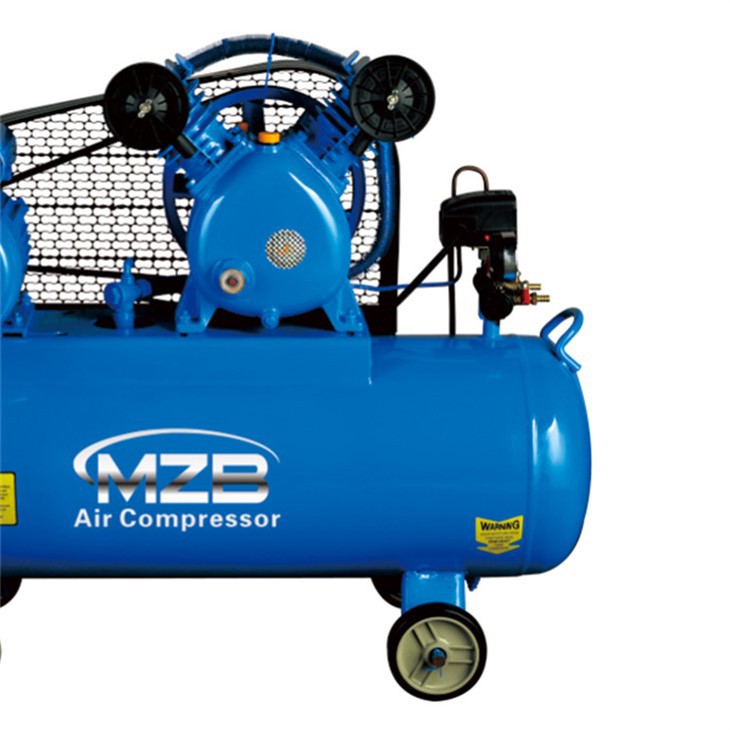
Before discussing its performance in high - altitude areas, let's briefly understand how a C Type Air Compressor operates. The C Type Piston Air Compressor is a type of positive - displacement compressor. It uses a piston within a cylinder to compress air. As the piston moves down, it creates a vacuum that draws air into the cylinder. Then, as the piston moves up, it compresses the air and forces it out through a discharge valve.
Impact of High - Altitude on C Type Air Compressors
Reduced Air Intake
The most significant effect of high - altitude on a C Type Air Compressor is the reduced air intake. Since the air at high altitudes is less dense, the compressor takes in less air per stroke. This means that the volumetric efficiency of the compressor decreases. Volumetric efficiency is the ratio of the actual volume of air compressed to the theoretical volume that the compressor could compress under ideal conditions. As the air intake is reduced, the compressor has to work harder to achieve the same output pressure as it would at sea level.
Increased Compression Ratio
The compression ratio of a compressor is the ratio of the discharge pressure to the intake pressure. At high altitudes, the intake pressure is lower. To achieve the same discharge pressure as at sea - level, the compression ratio has to increase. A higher compression ratio means that the compressor has to do more work to compress the air. This can lead to increased energy consumption and higher operating temperatures.
Cooling Challenges
High - altitude environments also pose challenges for the cooling of the compressor. Since the air is thinner, it has a lower heat - transfer capacity. The cooling fins on the compressor, which rely on air circulation to dissipate heat, are less effective. This can cause the compressor to overheat, leading to reduced performance and potentially damaging the internal components.
Adapting C Type Air Compressors for High - Altitude Use
Capacity Adjustment
One way to adapt a C Type Air Compressor for high - altitude use is to adjust its capacity. This can be done by increasing the size of the compressor or by using multiple compressors in parallel. By increasing the capacity, the compressor can compensate for the reduced air intake and still achieve the required output.
Engine and Motor Modifications
If the compressor is powered by an engine or a motor, it may need to be modified. For example, engines may require adjustments to the fuel - air mixture to account for the thinner air. Motors may need to be sized larger to handle the increased load due to the higher compression ratio.
Cooling System Upgrades
To address the cooling challenges, the cooling system of the compressor can be upgraded. This may include adding larger cooling fins, installing a more powerful cooling fan, or using a liquid - cooling system.
Case Studies
We have had several customers who have used our C Type Piston Air Compressor in high - altitude areas. In one case, a mining operation at an altitude of 3000 meters reported that their standard C Type Air Compressor was not able to meet the air - supply requirements. After we recommended a capacity adjustment and a cooling system upgrade, the compressor performance improved significantly. The mining operation was able to resume its normal production with the adapted compressor.
Conclusion
In conclusion, while a C Type Air Compressor can be used in a high - altitude environment, it requires careful consideration and possible adaptations. The reduced air density, increased compression ratio, and cooling challenges at high altitudes can affect the performance of the compressor. However, with proper adjustments such as capacity adjustment, engine and motor modifications, and cooling system upgrades, the compressor can be made suitable for high - altitude use.
If you are considering using a C Type Air Compressor in a high - altitude area, we are here to help. Our team of experts can provide you with detailed advice on the best way to adapt our compressors for your specific needs. We understand the unique challenges of high - altitude operations and are committed to providing you with reliable and efficient solutions. Contact us today to start a discussion about your procurement requirements and let's work together to find the best C Type Air Compressor for your high - altitude project.
References
- ASME (American Society of Mechanical Engineers). "Compressor Engineering Handbook".
- ISO (International Organization for Standardization). Standards related to air compressors and their performance in different environments.
- Various technical papers on the impact of high - altitude on industrial equipment.


