


As a dedicated supplier of Screw Type Air Compressors, I've witnessed firsthand the pivotal role these machines play in various industries. Among the numerous components that make up a screw type air compressor, the inverter stands out as a critical element. In this blog, I'll delve into how the inverter of a screw type air compressor works, exploring its functions, benefits, and significance in the overall operation of the compressor.
Understanding the Basics of a Screw Type Air Compressor
Before we dive into the inverter, let's briefly understand the fundamental working principle of a screw type air compressor. A screw type air compressor uses two meshing helical rotors (usually male and female) to compress air. As the rotors turn, the volume between them decreases, causing the air to be compressed. This type of compressor is known for its high efficiency, reliability, and continuous operation capabilities, making it a popular choice for Rotary Screw Air Compressor applications in industries such as manufacturing, automotive, and food processing.

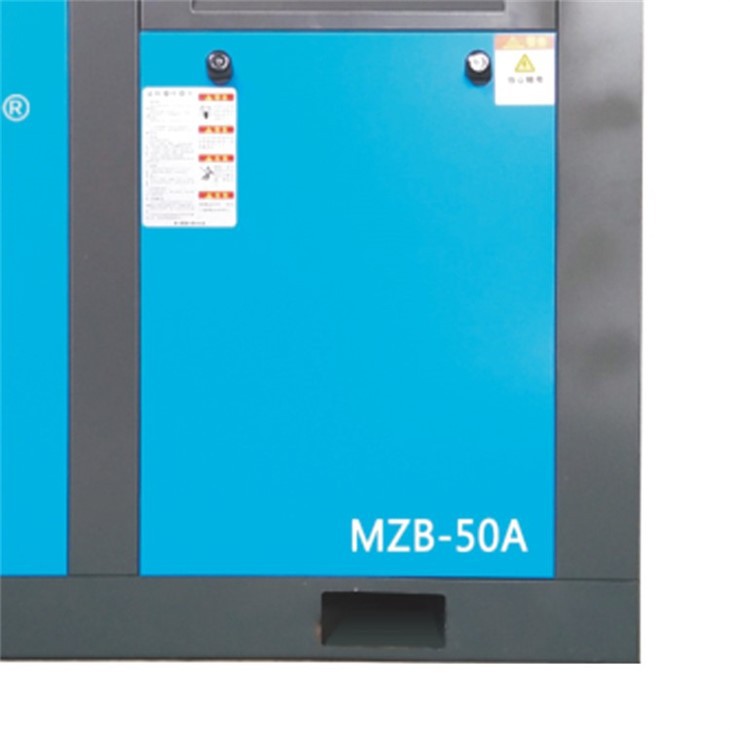
What is an Inverter in a Screw Type Air Compressor?
An inverter, also known as a variable frequency drive (VFD), is an electronic device that controls the speed of the electric motor in a screw type air compressor. Traditional air compressors often operate at a fixed speed, which means they consume a constant amount of power regardless of the actual air demand. In contrast, an inverter - equipped compressor can adjust the motor speed according to the required air output, resulting in more efficient energy usage.
How Does the Inverter Work?
Power Conversion
The inverter takes the incoming AC (alternating current) power from the electrical grid and first converts it into DC (direct current) power using a rectifier. This DC power is then stored in a DC bus capacitor. The rectifier is typically a set of diodes that allow current to flow in only one direction, effectively converting the AC waveform into a DC signal.
Variable Frequency Output
After the power is converted to DC, the inverter uses an inverter bridge (usually made up of insulated - gate bipolar transistors or IGBTs) to convert the DC power back into AC power. The key feature here is that the frequency and voltage of this new AC power can be adjusted. By changing the frequency of the AC power supplied to the motor, the inverter can control the rotational speed of the motor. According to the formula (n=\frac{120f}{p}), where (n) is the motor speed in revolutions per minute (RPM), (f) is the frequency of the AC power, and (p) is the number of motor poles, a change in frequency directly affects the motor speed.
Air Demand Sensing and Control
The inverter in a screw type air compressor is connected to a control system that monitors the air demand. This can be done through pressure sensors installed in the compressed air system. When the air demand is low, the pressure in the system rises. The control system detects this increase in pressure and sends a signal to the inverter to reduce the motor speed. As the motor speed decreases, the rotors in the compressor turn more slowly, producing less compressed air. Conversely, when the air demand increases and the pressure drops, the control system signals the inverter to increase the motor speed, thereby increasing the air output.
Benefits of Using an Inverter in a Screw Type Air Compressor
Energy Savings
One of the most significant advantages of using an inverter in a screw type air compressor is energy savings. Since the compressor can adjust its motor speed according to the actual air demand, it consumes less power during periods of low demand. Studies have shown that inverter - driven compressors can reduce energy consumption by up to 30 - 50% compared to fixed - speed compressors, resulting in substantial cost savings over time.
Extended Equipment Lifespan
By reducing the stress on the motor and other components, an inverter helps to extend the lifespan of the air compressor. Fixed - speed compressors often experience frequent starts and stops, which can cause wear and tear on the motor, belts, and other mechanical parts. In contrast, an inverter - equipped compressor can operate smoothly at different speeds, minimizing the mechanical stress and reducing the likelihood of breakdowns.
Precise Pressure Control
Inverter - driven compressors can maintain a more precise and stable air pressure. This is crucial in applications where a consistent air pressure is required, such as in pneumatic tools and automated manufacturing processes. The ability to adjust the motor speed in real - time allows the compressor to respond quickly to changes in air demand, ensuring that the air pressure remains within the desired range.
Applications of Inverter - Equipped Screw Type Air Compressors
Industrial Use Screw Air Compressor
In industrial settings, where air demand can vary significantly throughout the day, inverter - equipped screw type air compressors are highly beneficial. For example, in a manufacturing plant, different production lines may have different air requirements at different times. An inverter - driven compressor can adjust its output to meet these changing demands, providing a reliable and energy - efficient source of compressed air.
Small and Medium - Sized Enterprises
Small and medium - sized enterprises (SMEs) often have limited budgets and need to optimize their energy consumption. An inverter - equipped screw type air compressor can be a cost - effective solution for these businesses. It allows them to reduce their energy bills while still maintaining a high - quality compressed air supply for their operations.
Conclusion
The inverter in a screw type air compressor is a remarkable piece of technology that offers numerous benefits in terms of energy efficiency, equipment lifespan, and pressure control. As a supplier of Rotary Screw Air Compressor, I highly recommend considering an inverter - equipped compressor for your industrial or commercial needs. If you're interested in learning more about our range of screw type air compressors or have any questions regarding the inverter technology, please don't hesitate to contact us. We're here to assist you in finding the perfect air compressor solution for your specific requirements.
References
- "Variable Frequency Drives: Principles and Applications" by Bimal K. Bose
- "Compressed Air Systems: Energy Conservation and Management" by David W. Brown


