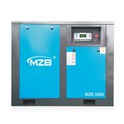

As a supplier of Vertical Tank Air Compressors, I often get asked a crucial question by customers: "What is the maximum number of pneumatic tools I can connect to a vertical tank air compressor?" This is a significant query because using the right number of tools with your air compressor ensures optimal performance, efficiency, and longevity of both the compressor and the tools. In this blog post, I'll delve into the factors that determine this number and provide some guidelines to help you make an informed decision.
Understanding the Basics of Air Compressors and Pneumatic Tools
Before we can determine the maximum number of pneumatic tools that can be connected to a vertical tank air compressor, it's essential to understand how these systems work. A vertical tank air compressor is designed to draw in air, compress it, and store it in a tank. This compressed air is then used to power pneumatic tools, which convert the energy of the compressed air into mechanical work.
The key specifications of an air compressor that affect its ability to power pneumatic tools are its cubic feet per minute (CFM) rating and its pounds per square inch (PSI) rating. The CFM rating indicates the volume of air the compressor can deliver at a given pressure, while the PSI rating represents the pressure at which the air is delivered. Pneumatic tools also have their own CFM and PSI requirements, which must be met for the tools to operate effectively.
Factors Affecting the Number of Tools
1. Air Compressor Capacity
The CFM rating of your vertical tank air compressor is the primary factor that determines how many pneumatic tools you can connect. Each pneumatic tool has a specific CFM requirement, which varies depending on the type and size of the tool. For example, a small nail gun may require only 1 - 2 CFM, while a large impact wrench could need 5 - 10 CFM or more.
To calculate the maximum number of tools you can connect, you need to add up the CFM requirements of all the tools you plan to use simultaneously and ensure that the total does not exceed the CFM rating of your compressor at the required PSI. For instance, if you have a compressor with a CFM rating of 10 at 90 PSI, and you want to use two nail guns that each require 1.5 CFM and an impact wrench that requires 5 CFM, the total CFM requirement is 1.5 + 1.5 + 5 = 8 CFM. Since 8 CFM is less than the compressor's 10 CFM rating, you can safely connect these three tools.
2. Tool Usage Patterns
The way you use your pneumatic tools also affects the number of tools you can connect to your compressor. If you use your tools intermittently, meaning you don't run them all at the same time continuously, you may be able to connect more tools than if you use them continuously. This is because the compressor has time to replenish the air in the tank between tool uses.

For example, if you have a painting job where you use a spray gun for a few seconds at a time and then pause, the compressor can refill the tank during the pauses. In this case, you may be able to connect additional tools that you use during these pauses without overloading the compressor.
3. Air Hose Size and Length
The size and length of the air hoses you use to connect your tools to the compressor can also impact the number of tools you can use. Longer hoses and smaller diameter hoses can cause a drop in air pressure, which means the tools may not receive enough air to operate properly. This can result in reduced tool performance and may require you to reduce the number of tools you connect to the compressor.
To minimize pressure drop, it's recommended to use the shortest and largest diameter hoses possible. If you need to use long hoses, consider using a larger diameter hose to maintain adequate air flow.
4. Tank Size
The size of the vertical tank on your air compressor can also play a role in determining the number of tools you can connect. A larger tank can store more compressed air, which can help to compensate for sudden spikes in air demand. This means that you may be able to connect more tools to a compressor with a larger tank, especially if you use tools that have high intermittent air requirements.

Calculating the Maximum Number of Tools
To calculate the maximum number of pneumatic tools you can connect to your vertical tank air compressor, follow these steps:
- Determine the CFM requirements of each tool: Check the manufacturer's specifications for each pneumatic tool you plan to use to find out its CFM requirement at the recommended PSI.
- Add up the CFM requirements: Add up the CFM requirements of all the tools you want to use simultaneously.
- Compare the total CFM to the compressor's rating: Make sure the total CFM requirement does not exceed the CFM rating of your compressor at the required PSI. If it does, you may need to reduce the number of tools or upgrade to a larger compressor.
Examples of Tool Combinations
Let's look at some examples to illustrate how to calculate the maximum number of tools based on different compressor ratings:
Example 1: Small Compressor
- Compressor: A small vertical tank air compressor with a CFM rating of 3 at 90 PSI.
- Tools:
- A small nail gun with a CFM requirement of 1 at 90 PSI.
- A pneumatic stapler with a CFM requirement of 1.5 at 90 PSI.
- Total CFM requirement: 1 + 1.5 = 2.5 CFM.
- Since 2.5 CFM is less than the compressor's 3 CFM rating, you can safely connect these two tools.
Example 2: Medium Compressor

- Compressor: A medium-sized vertical tank air compressor with a CFM rating of 8 at 90 PSI.
- Tools:
- Two small nail guns, each with a CFM requirement of 1 at 90 PSI.
- An impact wrench with a CFM requirement of 5 at 90 PSI.
- Total CFM requirement: 1 + 1 + 5 = 7 CFM.
- Since 7 CFM is less than the compressor's 8 CFM rating, you can connect these three tools.
Choosing the Right Vertical Tank Air Compressor
If you're in the market for a vertical tank air compressor, it's important to choose one that can meet your specific needs. Consider the following factors when making your decision:

- CFM and PSI requirements: Determine the total CFM and PSI requirements of all the pneumatic tools you plan to use simultaneously. Choose a compressor with a CFM rating that exceeds this total to ensure optimal performance.
- Tank size: If you plan to use tools with high intermittent air requirements, consider a compressor with a larger tank to store more compressed air.
- Duty cycle: The duty cycle of a compressor refers to the amount of time it can run continuously before it needs to rest. Choose a compressor with a duty cycle that is appropriate for your usage patterns.
At our company, we offer a range of Efficient Vertical Tank Air Compressors and Direct Driven Vertical Tank Air Compressors that are designed to meet the needs of various applications. Our compressors are built with high-quality components and advanced technology to ensure reliable performance and long service life.
Conclusion
Determining the maximum number of pneumatic tools you can connect to a vertical tank air compressor requires careful consideration of several factors, including the compressor's CFM rating, tool usage patterns, air hose size and length, and tank size. By understanding these factors and following the guidelines outlined in this blog post, you can make an informed decision and ensure that your compressor and tools operate efficiently and effectively.
If you have any questions or need assistance in choosing the right vertical tank air compressor for your needs, please don't hesitate to contact us. We're here to help you find the perfect solution for your pneumatic tool requirements.
References
- Compressed Air and Gas Institute (CAGI). (2023). Pneumatic Tool Performance Standards.
- Manufacturer's specifications for vertical tank air compressors and pneumatic tools.