
Hey there! As a supplier of C Type Piston Air Compressors, I often get asked about what size of pneumatic tools these compressors can support. It's a crucial question, especially for those who rely on pneumatic tools in their daily work or projects. So, let's dive right in and explore this topic.
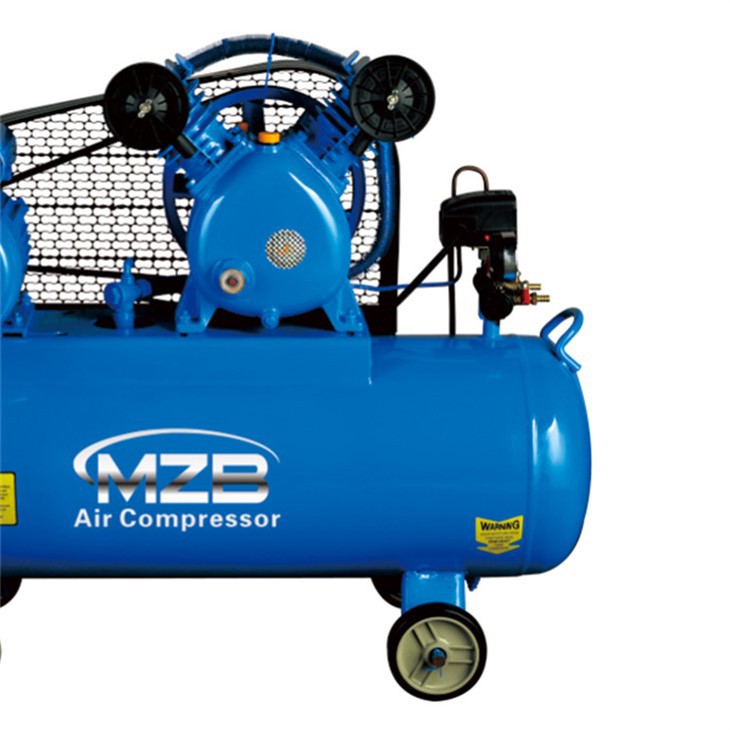
First off, let's understand what a C Type Piston Air Compressor is. You can check out more details about it on our website: C Type Piston Air Compressor. These compressors are known for their reliability and efficiency. They work by using a piston to compress air in a cylinder, which is then stored in a tank and released when needed to power pneumatic tools.
Now, the size of pneumatic tools that a C Type Piston Air Compressor can support mainly depends on two key factors: air pressure (measured in pounds per square inch or PSI) and air volume (measured in cubic feet per minute or CFM).
Air Pressure (PSI)
Most pneumatic tools require a specific air pressure to operate effectively. For example, a simple nail gun might need around 70 - 120 PSI, while a more heavy - duty impact wrench could require 90 - 150 PSI. C Type Piston Air Compressors usually have a maximum operating pressure. This means that as long as the required PSI of the pneumatic tool is within the compressor's maximum pressure rating, the tool can potentially be used.
Let's say our C Type Piston Air Compressor has a maximum pressure of 150 PSI. Any pneumatic tool that needs up to 150 PSI can be connected to it. But if a tool requires, say, 180 PSI, then our compressor won't be able to support it properly. The tool might not work at its full capacity or could even malfunction.
Air Volume (CFM)
Air volume is just as important as air pressure. Different pneumatic tools consume different amounts of air per minute. A small airbrush might use only 0.5 - 1 CFM, while a large sandblaster could use 15 - 30 CFM or more.
To determine if a C Type Piston Air Compressor can support a particular pneumatic tool, you need to compare the tool's CFM requirement with the compressor's CFM output at the required PSI. For instance, if a pneumatic grinder needs 5 CFM at 90 PSI, and our compressor can deliver 6 CFM at 90 PSI, then it should be able to support the grinder without any issues.
However, if the tool's CFM requirement is higher than the compressor's output, the tool will run out of air quickly. This can lead to inconsistent performance, like the tool stalling or not having enough power to complete the task.
Different Sizes of Pneumatic Tools and Compatibility
Small - Sized Pneumatic Tools
Small - sized pneumatic tools are typically used for light - duty tasks such as crafting, DIY projects, or small - scale repairs. Examples include airbrushes, small nail guns, and some pneumatic screwdrivers. These tools usually have low CFM requirements, often less than 2 CFM, and relatively low PSI requirements, around 70 - 90 PSI.
Our C Type Piston Air Compressor is well - suited for these small - sized tools. It can easily provide the necessary air pressure and volume to keep them running smoothly. Whether you're working on a small woodworking project or doing some home repairs, our compressor can be a reliable partner.
Medium - Sized Pneumatic Tools
Medium - sized pneumatic tools are used for more demanding tasks in automotive repair, construction, and metalworking. Tools like impact wrenches, air ratchets, and medium - sized sanders fall into this category. They generally require 3 - 8 CFM at 90 - 120 PSI.
Our C Type Piston Air Compressor can support many medium - sized pneumatic tools, but it's important to check the specific CFM and PSI requirements. If the tool's requirements are close to the compressor's maximum output, it might be a good idea to monitor the tool's performance to ensure it's getting enough air.

Large - Sized Pneumatic Tools
Large - sized pneumatic tools are used for heavy - duty industrial applications such as large - scale construction, mining, and heavy machinery maintenance. Tools like large sandblasters, high - torque impact wrenches, and pneumatic jackhammers have high CFM requirements, often 10 CFM or more, and can require high PSI, up to 150 PSI.
While our C Type Piston Air Compressor can support some large - sized tools, it might not be sufficient for the most demanding ones. For very high - CFM and high - PSI tools, you might need to consider a larger or more powerful compressor. You can find more about our range of compressors on our factory page: C Type Piston Air Compressor.
Tips for Choosing the Right Compressor - Tool Combination
- Know Your Tools: Before buying a C Type Piston Air Compressor, make a list of all the pneumatic tools you plan to use. Note down their PSI and CFM requirements.
- Consider Future Needs: If you think you might upgrade your tools or add new ones in the future, choose a compressor with some extra capacity.
- Test the Setup: If possible, test the compressor with the pneumatic tools you have. This will give you a real - world idea of how well they work together.
In conclusion, our C Type Piston Air Compressor can support a wide range of pneumatic tools, from small - sized ones for DIY projects to many medium - sized tools for professional use. However, for the most heavy - duty large - sized tools, you need to carefully evaluate the tool's requirements against the compressor's capabilities.
If you're interested in purchasing a C Type Piston Air Compressor or have any questions about which pneumatic tools it can support, feel free to reach out to us. We're here to help you make the right choice for your needs.
References
- Pneumatic Tool Handbook, various editions
- Compressor Manufacturer's Manuals