


When it comes to air compressors, there are various types available in the market, each with its own unique features, advantages, and limitations. As a supplier of C Type Piston Air Compressor, I often encounter customers who are curious about how our C Type Piston Air Compressor differs from other types of air compressors. In this blog post, I will delve into the key differences between C Type Piston Air Compressors and other popular types, such as rotary screw air compressors, centrifugal air compressors, and diaphragm air compressors.
Working Principle
One of the fundamental differences between air compressors lies in their working principles. C Type Piston Air Compressors operate on the positive displacement principle. They use one or more pistons, driven by a crankshaft, to compress air within a cylinder. As the piston moves downwards, it creates a vacuum that draws air into the cylinder through an intake valve. When the piston moves upwards, it compresses the air, which is then forced out through a discharge valve.
In contrast, rotary screw air compressors also operate on the positive displacement principle but use two interlocking helical screws to compress air. As the screws rotate, the air is trapped between the threads and gradually compressed as it moves along the screw axis. Centrifugal air compressors, on the other hand, use a high - speed impeller to accelerate the air and then convert the kinetic energy of the air into pressure energy in a diffuser. Diaphragm air compressors use a flexible diaphragm that moves back and forth to compress air in a chamber.
Performance and Capacity
The performance and capacity of an air compressor are crucial factors to consider. C Type Piston Air Compressors are typically well - suited for small to medium - sized applications. They can provide relatively high pressure, often reaching up to 150 - 200 psi (pounds per square inch), which makes them suitable for tasks such as powering pneumatic tools, inflating tires, and operating small industrial machinery. However, their flow rate, measured in cubic feet per minute (CFM), is usually limited compared to larger industrial compressors.
Rotary screw air compressors are known for their high - volume, continuous - duty operation. They can deliver a large amount of compressed air at a relatively constant pressure, making them ideal for large - scale industrial applications where a continuous supply of compressed air is required. Centrifugal air compressors are designed for very high - volume applications and can handle extremely large flow rates, often used in industries such as oil and gas, chemical processing, and power generation. Diaphragm air compressors, due to their design, have relatively low flow rates and are mainly used for applications that require clean, oil - free air, such as in laboratories and medical equipment.
Efficiency
Efficiency is an important consideration for any air compressor, as it directly impacts operating costs. C Type Piston Air Compressors are generally less energy - efficient than rotary screw and centrifugal air compressors, especially when running continuously. This is because the reciprocating motion of the pistons creates more friction and requires more energy to operate. However, for intermittent use, where the compressor can be turned on and off as needed, the efficiency disadvantage may be less significant.
Rotary screw air compressors are known for their high efficiency, especially in continuous - duty applications. They have a smooth and continuous compression process, which reduces energy losses. Centrifugal air compressors also offer high efficiency at high flow rates, but they require a large amount of power to start up and are most efficient when operating at or near their design capacity. Diaphragm air compressors are relatively efficient for their small - scale applications but may not be the best choice for large - volume requirements due to their limited capacity.
Maintenance Requirements
Maintenance is another area where C Type Piston Air Compressors differ from other types. C Type Piston Air Compressors have a relatively complex design with many moving parts, such as pistons, valves, and connecting rods. This means that they require more frequent maintenance, including regular oil changes, valve inspections, and piston ring replacements. However, the maintenance tasks are often straightforward and can be performed by trained technicians or even some end - users with basic mechanical skills.
Rotary screw air compressors are generally easier to maintain compared to piston compressors. They have fewer moving parts, and the main maintenance tasks typically involve changing the oil and filters at regular intervals. Centrifugal air compressors are complex machines that require highly skilled technicians for maintenance and repair. They often have sophisticated control systems and high - speed rotating components that need to be carefully monitored and maintained. Diaphragm air compressors have relatively simple maintenance requirements, mainly involving checking and replacing the diaphragm periodically.
Noise Level
Noise level is an important factor, especially in indoor or noise - sensitive environments. C Type Piston Air Compressors tend to be noisier than other types due to the reciprocating motion of the pistons and the impact of the valves opening and closing. However, modern piston compressors often come with noise - reducing features such as sound - enclosing cabinets and vibration - dampening mounts to minimize the noise.
Rotary screw air compressors are generally quieter than piston compressors, especially when properly installed and maintained. They have a more continuous and smooth operation, which results in less noise. Centrifugal air compressors can be quite noisy, especially at high flow rates, but they are often installed in separate compressor rooms or outdoor locations to isolate the noise. Diaphragm air compressors are among the quietest types of air compressors, making them suitable for applications where low noise is a priority.
Cost
Cost is a significant consideration for any customer. C Type Piston Air Compressors are usually more affordable upfront compared to rotary screw and centrifugal air compressors. This makes them an attractive option for small businesses and home users with a limited budget. However, over the long term, the higher energy consumption and more frequent maintenance requirements of piston compressors may result in higher operating costs.
Rotary screw air compressors have a higher initial cost but offer lower operating costs in the long run, especially for continuous - duty applications. Centrifugal air compressors are the most expensive in terms of both initial purchase and installation costs, but they are cost - effective for large - scale industrial applications due to their high - volume capacity and efficiency at high flow rates. Diaphragm air compressors are relatively inexpensive for small - scale applications but may not be cost - effective for large - volume requirements.
Oil - Free Operation
Some applications require oil - free compressed air, such as in the food and beverage industry, pharmaceuticals, and electronics manufacturing. C Type Piston Air Compressors can be designed to provide oil - free air, but this often requires additional components and a more complex design, which can increase the cost.
Rotary screw air compressors are available in both oil - flooded and oil - free versions. The oil - free models are more expensive but are suitable for applications where oil contamination is not acceptable. Centrifugal air compressors can also provide oil - free air, and they are often used in large - scale oil - free applications. Diaphragm air compressors are inherently oil - free, making them an ideal choice for small - scale applications that require clean air.
Conclusion
In conclusion, C Type Piston Air Compressors have their own unique set of characteristics that set them apart from other types of air compressors. They are well - suited for small to medium - sized applications, offer relatively high pressure, and can be a cost - effective option for those with a limited budget. However, they also have some limitations, such as lower efficiency for continuous use, higher maintenance requirements, and relatively high noise levels.
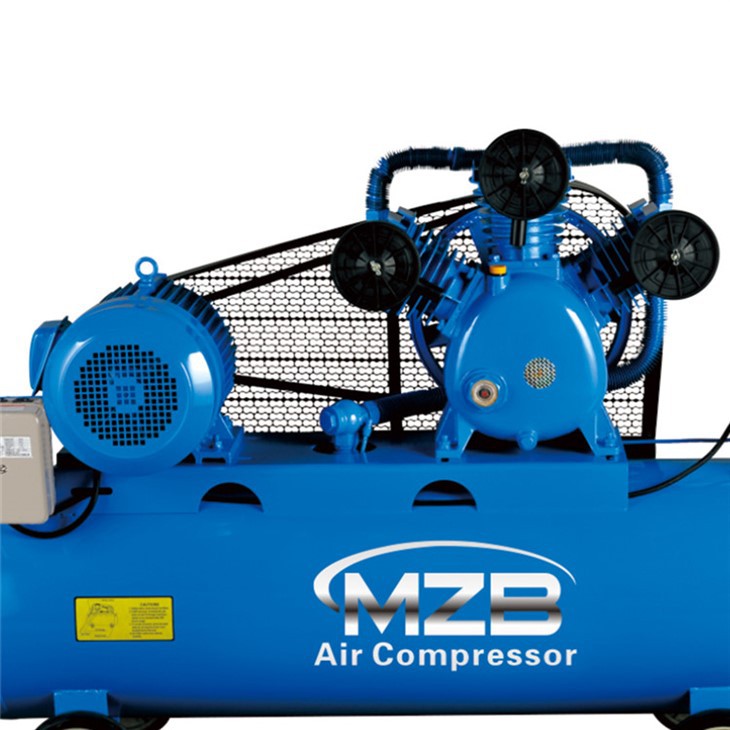

If you are considering an air compressor for your specific application, it is important to carefully evaluate your requirements in terms of performance, capacity, efficiency, maintenance, noise level, and cost. As a supplier of C Type Piston Air Compressors, we are committed to providing high - quality products and excellent customer service. If you have any questions or are interested in purchasing a C Type Piston Air Compressor, please feel free to contact us for more information and to discuss your specific needs. We look forward to working with you to find the best air compressor solution for your business.
References
- Compressed Air and Gas Institute (CAGI). "Air Compressor Handbook."
- ASME (American Society of Mechanical Engineers). "Standards for Air Compressors."
- Manufacturers' product manuals and technical specifications for various types of air compressors.


