

Hey there! As a supplier of Quiet Dental Air Compressors, I've been getting a lot of questions lately about how the size of these machines affects their performance. So, I thought I'd sit down and write this blog to share my insights with you all.
Let's start by talking about what we mean by "size" when it comes to dental air compressors. There are a few different aspects to consider. First, there's the physical size of the compressor unit itself. This includes its dimensions - how tall, wide, and deep it is. Then, there's the size of the air tank. The tank is where the compressed air is stored, and its capacity can vary quite a bit between different models.
Now, let's dig into how these different size factors impact performance.
Physical Size of the Compressor Unit
The physical size of the compressor unit can have several implications for its performance. A smaller compressor unit is generally more portable. If you're a dentist who needs to move your equipment around a lot, maybe between different offices or for mobile dental services, a compact compressor like our Oil Free Portable Air Compressor is a great choice. It's easy to carry and doesn't take up much space in your vehicle or office.
However, smaller units often have less powerful motors. This means they might not be able to generate as much compressed air at a given time compared to larger units. For example, if you have a busy dental practice with multiple dental chairs running simultaneously, a small compressor might struggle to keep up with the demand. You could end up experiencing a drop in air pressure, which can affect the performance of your dental tools.
On the other hand, larger compressor units usually come with more powerful motors. They can produce a higher volume of compressed air at a faster rate. This is ideal for high - volume dental practices where there's a constant need for a large amount of compressed air. But the downside is that they're less portable and take up more space in your office. You'll need to have a dedicated area to store and operate them.
Size of the Air Tank
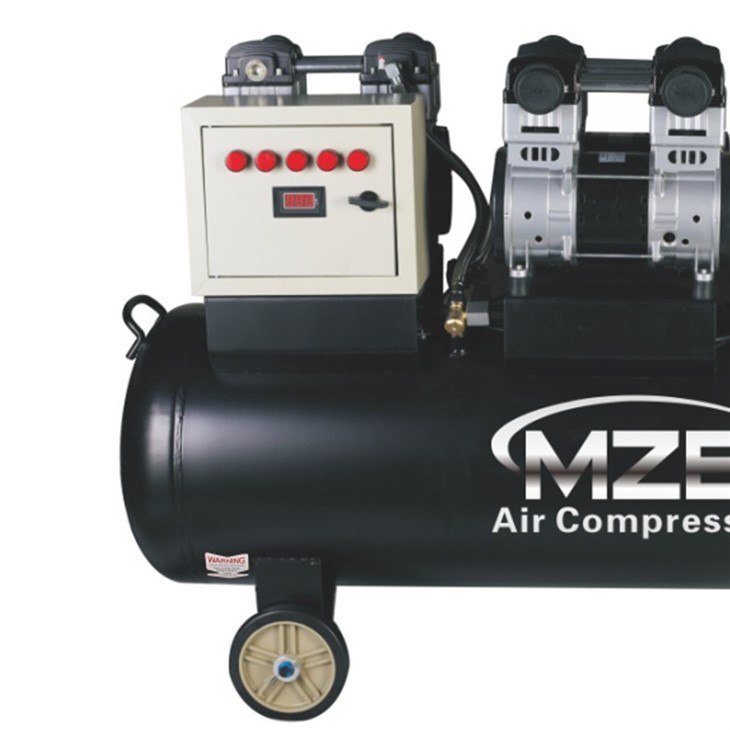
The size of the air tank is another crucial factor. A larger air tank can store more compressed air. This means that even if the compressor motor is running at a relatively slow rate, the stored air in the tank can be used to meet sudden spikes in demand. For instance, when you're using a high - speed dental drill, it requires a significant amount of compressed air in a short period. A large - tank compressor can supply this air without the motor having to work overtime.
Our Oilless Air Compressor comes in different tank sizes. The ones with larger tanks are great for practices that experience inconsistent air usage. They can provide a stable supply of compressed air, reducing the chances of pressure fluctuations.
In contrast, a smaller air tank has less storage capacity. It can only hold a limited amount of compressed air. So, if there's a sudden increase in demand, the compressor motor has to kick in immediately to replenish the air. This can lead to more frequent cycling of the motor, which not only puts more wear and tear on the motor but also increases the noise level. And let's face it, in a dental office, noise is a big deal. Patients don't want to be sitting in a noisy environment while getting their teeth worked on. That's why we also offer Super Silent Air Compressor models, which are designed to operate quietly, regardless of the tank size.

Other Performance Factors Related to Size
Size can also affect the maintenance requirements of the compressor. Smaller compressors are generally easier to maintain. They have fewer parts, and accessing those parts for cleaning and servicing is often simpler. This can save you time and money in the long run.
Larger compressors, while more powerful, may require more complex maintenance. The larger motors and bigger tanks need to be inspected and serviced regularly to ensure they're operating at peak performance. But don't worry, as a supplier, we can provide you with all the necessary maintenance guides and support to keep your compressor running smoothly.
Making the Right Choice
So, how do you decide which size of quiet dental air compressor is right for your practice? It really depends on your specific needs. If you're a solo dentist with a small practice and don't have a high volume of patients, a smaller, more portable compressor might be sufficient. You can save on space and still get the job done.
But if you have a large dental clinic with multiple dentists and a constant stream of patients, a larger compressor with a big air tank is probably the way to go. It will ensure that you always have enough compressed air to power your dental tools efficiently.
At the end of the day, we're here to help you make the best decision. We understand that every dental practice is unique, and we're committed to providing you with the right equipment to meet your needs. If you're interested in learning more about our quiet dental air compressors or have any questions about size and performance, don't hesitate to reach out. We'd love to have a chat with you and discuss your options. Whether you're just starting out or looking to upgrade your existing equipment, we're here to support you every step of the way.
References
- Compressed Air Handbook: A Guide to Compressed Air Systems. Compressed Air and Gas Institute.
- Dental Equipment and Technology: An Introduction. American Dental Association.