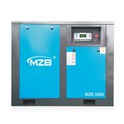

Hey there! I'm a supplier of screw air compressors, and today I wanna chat about the role of the air receiver tank when it's paired up with a screw air compressor.
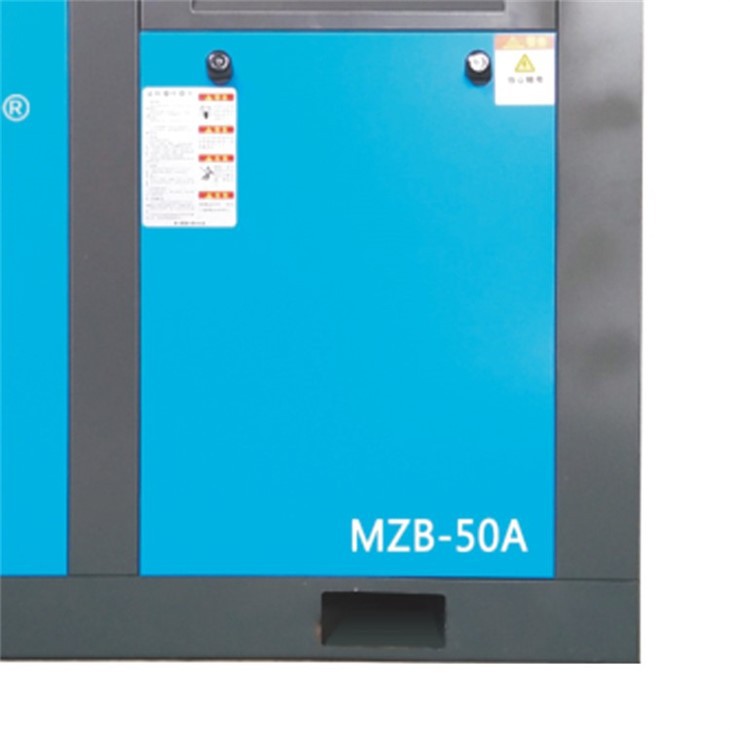
First off, let's get a basic understanding of what a screw air compressor is. Screw air compressors are pretty cool machines. There are different types out there, like the Industrial Use Screw Air Compressor, Rotary Screw Air Compressor, and Three Phase Screw Air Compressor. These compressors work by using two meshing screws to compress air. They're widely used in various industries because they can deliver a continuous supply of compressed air efficiently.
Now, let's talk about the air receiver tank. You can think of it as a storage unit for compressed air. When the screw air compressor pumps out compressed air, the air receiver tank stores it. This storage function is super important for a few reasons.
One of the main roles of the air receiver tank is to provide a buffer. In many industrial processes, the demand for compressed air isn't constant. There are times when there's a sudden spike in demand. If there's no air receiver tank, the screw air compressor would have to work really hard to meet that sudden demand. This could lead to overloading the compressor, causing it to wear out faster and potentially break down. But with the air receiver tank, it can release the stored compressed air during these high - demand periods. So, the compressor doesn't have to go into overdrive all the time. It can work at a more steady pace, which is better for its longevity.
Another benefit is that the air receiver tank helps to reduce pressure fluctuations. When the screw air compressor is running, the pressure of the compressed air it produces can vary a bit. These fluctuations can be a problem for some equipment that uses compressed air. For example, in precision manufacturing processes, even small pressure variations can affect the quality of the products. The air receiver tank smooths out these pressure changes. It acts like a shock absorber for the compressed air system. It takes in the air with varying pressures and then releases it at a more stable pressure, ensuring that the equipment gets a consistent supply of compressed air.

The air receiver tank also plays a role in removing moisture from the compressed air. As the air is compressed by the screw air compressor, its temperature rises. When this hot, compressed air enters the air receiver tank, it cools down. As it cools, the moisture in the air condenses. There are usually drain valves at the bottom of the air receiver tank. These valves can be opened periodically to let out the condensed water. This helps to keep the compressed air dry, which is crucial for many applications. Moisture in compressed air can cause corrosion in pipes and equipment, and it can also damage sensitive components in pneumatic tools.
In addition to these functions, the air receiver tank can also improve the overall efficiency of the compressed air system. Since it allows the screw air compressor to operate more steadily, the compressor doesn't have to start and stop as frequently. Starting and stopping a compressor consumes a lot of energy. By reducing these cycles, the system uses less energy overall. This not only saves on electricity costs but also has a positive impact on the environment.
Now, let's talk about how to size the air receiver tank correctly. Sizing is important because if the tank is too small, it won't be able to store enough air to meet the demand during peak periods. On the other hand, if it's too large, it'll take up unnecessary space and can be more expensive. The size of the air receiver tank depends on several factors. The first is the average and peak demand for compressed air in the facility. You need to know how much air is used during normal operation and how much is needed during the busiest times. The capacity of the screw air compressor also matters. A larger - capacity compressor will require a bigger air receiver tank to store the compressed air it produces.
When it comes to installation, it's important to place the air receiver tank in a suitable location. It should be installed in a well - ventilated area to allow for proper cooling. It also needs to be on a stable surface to prevent any movement or vibration. And of course, it should be installed according to all the relevant safety regulations.
If you're in the market for a screw air compressor and an air receiver tank, you need to make sure they're compatible. The capacity of the air receiver tank should be matched to the output of the screw air compressor. Also, consider the quality of both the compressor and the tank. High - quality equipment will last longer and perform better.
As a supplier of screw air compressors, I've seen firsthand how important it is to have a well - functioning air receiver tank in combination with a screw air compressor. Whether you're in a small workshop or a large industrial plant, having a reliable compressed air system is crucial for your operations.
If you're interested in learning more about our screw air compressors or need advice on choosing the right air receiver tank for your needs, don't hesitate to reach out. We're here to help you find the best solution for your compressed air requirements. Let's work together to get your compressed air system up and running at its best!
References:
- Compressed Air and Gas Handbook, various editions
- Industrial Compressed Air Systems: Design, Installation, and Maintenance guides
So, if you're looking to upgrade or set up a new compressed air system, give us a shout. We can have a detailed discussion about your specific needs and find the perfect combination of screw air compressor and air receiver tank for you.