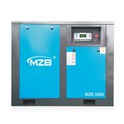

Hey there! As a supplier of Rotary Screw Air Compressor, I've seen firsthand how crucial it is to pick the right motor for these machines. A rotary screw air compressor is a workhorse in many industrial and commercial settings, and the motor is its heart. So, let's dive into how you can choose the perfect motor for your rotary screw air compressor.
Understanding Your Air Compressor Needs
First things first, you gotta figure out what your air compressor is gonna be used for. Different applications have different air requirements. For instance, if you're using it for small - scale workshops like auto repair shops, the demand for compressed air might not be as high as in a large manufacturing plant.
The key here is to calculate the required air volume, which is measured in cubic feet per minute (CFM). You also need to know the required pressure, usually measured in pounds per square inch (PSI). Once you have these numbers, you can start looking at motors that can meet these demands.
Motor Types for Rotary Screw Air Compressors
There are a few types of motors commonly used in Rotary Screw Air Compressor. The most popular ones are single - phase and three - phase motors.


Single - Phase Motors
Single - phase motors are usually used in smaller air compressors. They're easier to install and are suitable for applications where the power demand is relatively low. If you're running a small business or a home workshop, a single - phase motor might be a good choice. However, they do have some limitations. They generally can't handle as much power as three - phase motors, and they might not be as efficient in larger, more demanding applications.
Three - Phase Motors
On the other hand, Three Phase Screw Air Compressor with three - phase motors are the go - to for larger industrial applications. They're more efficient, can handle higher loads, and provide a more consistent power supply. Three - phase motors are also more durable and have a longer lifespan compared to single - phase motors. If your business has a high demand for compressed air, a three - phase motor is likely the better option.
Power Rating
The power rating of the motor is super important. It's measured in horsepower (HP). To choose the right power rating, you need to consider the size of your air compressor and the air requirements of your application.
If you choose a motor with too low a power rating, your air compressor won't be able to produce enough compressed air. On the flip side, if you go for a motor with too high a power rating, you'll end up wasting energy and money. As a general rule of thumb, for small - to - medium - sized air compressors used in workshops, a 1 - 5 HP motor might be sufficient. For larger industrial applications, you might need a motor with 10 HP or more.
Efficiency
Efficiency is another major factor. An efficient motor will consume less energy, which means lower operating costs in the long run. Look for motors with high energy - efficiency ratings. Motors with features like variable speed drives (VSD) are often more efficient. A VSD motor can adjust its speed according to the air demand, which helps save energy.
When you're comparing motors, check the efficiency ratings provided by the manufacturer. Don't just focus on the initial cost of the motor; think about the long - term savings you'll get from a more efficient motor.
Starting Method
The starting method of the motor is also something to consider. There are different starting methods, such as direct - on - line (DOL) starting, star - delta starting, and soft - start methods.
Direct - On - Line (DOL) Starting
DOL starting is the simplest and most common method. The motor is connected directly to the power supply when it starts. It's cheap and easy to install, but it can cause a high inrush current, which might damage the motor or other electrical equipment in some cases.
Star - Delta Starting
Star - delta starting is a more complex method. It reduces the inrush current by starting the motor in a star configuration and then switching to a delta configuration once it's running. This method is more suitable for larger motors and can help protect the electrical system.
Soft - Start Methods
Soft - start methods use electronic devices to gradually increase the voltage and current to the motor during startup. This reduces the inrush current and stress on the motor and electrical system. Soft - start methods are a good choice for applications where a smooth startup is required.
Compatibility with the Compressor
The motor you choose must be compatible with your Rotary Screw Air Compressor. This includes things like the shaft size, coupling type, and mounting arrangement. Make sure to check the manufacturer's specifications for both the motor and the air compressor to ensure they'll work together properly.
If the motor isn't compatible, it can lead to problems like vibration, premature wear and tear, and even damage to the compressor. So, take the time to double - check the compatibility before making a purchase.
Maintenance and Serviceability
Consider the maintenance requirements of the motor. A motor that's easy to maintain will save you time and money in the long run. Look for motors with accessible components, and check if the manufacturer provides easy - to - follow maintenance instructions.
Also, think about the availability of spare parts. If a part of the motor breaks down, you want to be able to get a replacement quickly. Choose a motor from a reputable manufacturer that has a good supply chain for spare parts.
Cost
Of course, cost is always a factor. You need to balance the initial cost of the motor with its long - term benefits. A more expensive motor might have better efficiency, durability, and performance, which can save you money in the long run.
Don't just go for the cheapest option; consider the overall value. Compare the prices of different motors, taking into account their features, efficiency, and maintenance requirements.
Conclusion
Choosing the right motor for your Rotary Screw Air Compressor is a big decision. It involves considering factors like your air compressor needs, motor type, power rating, efficiency, starting method, compatibility, maintenance, and cost.
If you're still not sure which motor is right for you, don't hesitate to reach out. As a supplier, we have the expertise to help you make the best choice for your specific application. Whether you're looking for a motor for a small Screw Type Air Compressor in your workshop or a large - scale industrial Three Phase Screw Air Compressor, we can provide you with the right solution. Contact us today to start the conversation about your air compressor motor needs!
References
- Compressed Air and Gas Institute (CAGI) publications on air compressor motors.
- Manufacturer manuals for various rotary screw air compressors and motors.