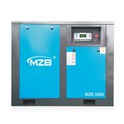

In the realm of industrial and commercial operations, the demand for clean - air applications is on the rise. From food and beverage production to pharmaceutical manufacturing, electronics assembly, and even painting and sandblasting, clean air is not just a preference but a necessity. As a supplier of vertical tank air compressors, I understand the critical role that the right compressor plays in ensuring clean air. In this blog, we will explore different types of vertical tank air compressors and determine which one is more suitable for clean - air applications.
Understanding Clean - Air Applications
Before delving into the types of vertical tank air compressors, it's essential to understand what clean - air applications entail. Clean air in industrial settings refers to air that is free from contaminants such as oil, water, dust, and other particulates. These contaminants can have detrimental effects on the end - product or the process itself. For example, in the food and beverage industry, even a small amount of oil or dust in the compressed air can contaminate the product, leading to health risks and product recalls. In electronics manufacturing, contaminants can damage sensitive components, resulting in product failures.
Types of Vertical Tank Air Compressors
Oil - Lubricated Vertical Tank Air Compressors
Oil - lubricated vertical tank air compressors are a common type in the market. These compressors use oil to lubricate the moving parts, such as pistons and cylinders. The oil helps reduce friction, which in turn increases the compressor's efficiency and lifespan. However, the presence of oil in the compression chamber means that there is a risk of oil carry - over into the compressed air.
In clean - air applications, this oil carry - over can be a significant problem. To mitigate this, oil - lubricated compressors are often equipped with oil separators and filters. These components are designed to remove as much oil as possible from the compressed air. However, even with the best filtration systems, there is still a small amount of oil that can make its way into the air stream.
For applications where the tolerance for oil contamination is extremely low, such as in the pharmaceutical or food industries, oil - lubricated vertical tank air compressors may not be the best choice. However, for applications where a small amount of oil contamination can be tolerated, such as in some general manufacturing processes, they can be a cost - effective option.
Oil - Free Vertical Tank Air Compressors
Oil - free vertical tank air compressors, as the name suggests, do not use oil in the compression chamber. Instead, they rely on other materials, such as Teflon or special coatings, to reduce friction between the moving parts. This design eliminates the risk of oil carry - over, making them an ideal choice for clean - air applications.
In industries where strict air quality standards must be met, such as the semiconductor and medical device manufacturing sectors, oil - free vertical tank air compressors are the go - to option. They can provide clean, oil - free air that meets the most stringent requirements. However, oil - free compressors tend to be more expensive than their oil - lubricated counterparts. They also require more frequent maintenance, as the non - oil components can wear out faster.
Efficient Vertical Tank Air Compressor
The efficient vertical tank air compressor is designed to provide a balance between performance and energy efficiency. These compressors often incorporate advanced technologies, such as variable speed drives, to adjust the compressor's output according to the demand. This not only reduces energy consumption but also helps maintain a consistent air pressure.


In clean - air applications, the efficiency of the compressor is crucial. An inefficient compressor can generate more heat, which can lead to the formation of water vapor in the compressed air. This water vapor can then carry contaminants, such as dust and bacteria, into the air stream. The efficient vertical tank air compressor minimizes these risks by operating at optimal conditions, ensuring that the compressed air remains clean.
Direct Driven Vertical Tank Air Compressor
Direct driven vertical tank air compressors have a simple and straightforward design. In these compressors, the motor is directly connected to the compressor pump, eliminating the need for belts or gears. This design reduces the number of moving parts, which in turn reduces the risk of mechanical failures and maintenance requirements.
In clean - air applications, the reliability of the compressor is of utmost importance. A direct driven compressor is less likely to break down, ensuring a continuous supply of clean air. Additionally, the absence of belts and gears means that there is no risk of debris from these components entering the compressed air.
Factors to Consider When Choosing a Vertical Tank Air Compressor for Clean - Air Applications
Air Quality Requirements
The most critical factor is the air quality requirements of the application. If the application demands oil - free air, then an oil - free vertical tank air compressor is the obvious choice. However, if a small amount of oil contamination can be tolerated, an oil - lubricated compressor with proper filtration may be sufficient.
Energy Efficiency
Energy costs can be a significant part of the operating expenses of an air compressor. Choosing an energy - efficient compressor, such as the efficient vertical tank air compressor, can help reduce these costs in the long run.
Reliability and Maintenance
Reliability is crucial in clean - air applications, as any downtime can disrupt the production process. Direct driven vertical tank air compressors are known for their reliability. Additionally, considering the maintenance requirements is essential. Oil - free compressors may require more frequent maintenance, but this should be weighed against the cost of potential product contamination in case of a compressor failure.
Cost
Cost is always a consideration. Oil - lubricated compressors are generally less expensive than oil - free compressors. However, the cost of filtration systems and potential product losses due to oil contamination should also be factored in.
Conclusion
In conclusion, the choice of the vertical tank air compressor for clean - air applications depends on several factors. For applications with strict oil - free air requirements, such as the pharmaceutical and semiconductor industries, oil - free vertical tank air compressors are the most suitable. They provide the cleanest air, eliminating the risk of oil contamination.
However, for applications where a small amount of oil can be tolerated, oil - lubricated compressors with proper filtration can be a cost - effective option. The efficient vertical tank air compressor offers a good balance between performance and energy efficiency, while the direct driven vertical tank air compressor provides reliability and simplicity.
If you are in the market for a vertical tank air compressor for your clean - air application, I encourage you to contact us for more information. Our team of experts can help you evaluate your needs and select the most suitable compressor for your specific requirements. We are committed to providing high - quality air compressors that meet the most stringent clean - air standards.
References
- ASME Compressed Air and Gas Institute (CAGI) standards on air compressor performance and air quality.
- Industrial air compressor manufacturer manuals and technical specifications.
- Research papers on clean - air applications in various industries.