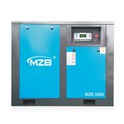

Hey there! I'm a supplier of Three Phase Screw Air Compressors. Today, I'm gonna share with you how to adjust the pressure switch of a three - phase screw air compressor.
First off, let me tell you why the pressure switch is so important. The pressure switch in a three - phase screw air compressor acts like a traffic cop. It controls when the compressor starts and stops based on the air pressure in the system. If it's not set right, you might end up with too much or too little pressure, which can mess up your operations big time.
Before we jump into the adjustment process, make sure you've got all the right tools. You'll need a good quality pressure gauge to accurately measure the air pressure, a screwdriver (usually a flat - head or Phillips, depending on your compressor model), and maybe a pair of pliers. Safety first, though! Always turn off the compressor and unplug it from the power source before you start working on it. This is to avoid any electrical shocks or other accidents.
Now, let's locate the pressure switch. On most three - phase screw air compressors, the pressure switch is usually found near the control panel. It's a small box - like component with wires connected to it. Once you've found it, take a look at the current settings. There are usually two main settings on a pressure switch: the cut - in pressure and the cut - out pressure.
The cut - in pressure is the point at which the compressor starts up. It kicks in when the air pressure in the tank drops to this level. The cut - out pressure, on the other hand, is when the compressor stops running. It shuts off once the air pressure in the tank reaches this higher level.
To adjust the cut - in pressure, you'll need to find the appropriate adjustment screw on the pressure switch. It's often marked or color - coded for easy identification. Use your screwdriver to turn the screw clockwise to increase the cut - in pressure or counter - clockwise to decrease it. Make small adjustments at a time and then check the pressure with your gauge. You can test this by letting some air out of the tank until the compressor starts. If it starts at the wrong pressure, keep making small adjustments until it's right.
Adjusting the cut - out pressure is a similar process. Locate the adjustment screw for the cut - out pressure. Again, turn it clockwise to raise the cut - out pressure and counter - clockwise to lower it. After making an adjustment, run the compressor until it shuts off and check the pressure with your gauge. Just like with the cut - in pressure, make small changes and keep testing until you get the desired pressure.
One thing to keep in mind is that different applications may require different pressure settings. For example, if you're using the Rotary Screw Air Compressor for light - duty tasks like inflating tires, you won't need as high of a pressure as if you're using an Industrial Use Screw Air Compressor for heavy - duty manufacturing processes.
If you're using a Three Phase Screw Air Compressor in an industrial setting, you might need to set the cut - in pressure around 80 - 90 psi and the cut - out pressure around 110 - 120 psi. But these are just general guidelines, and you should always refer to the manufacturer's recommendations for your specific compressor model.
After you've made the adjustments, double - check all the connections. Make sure the wires are firmly attached to the pressure switch and that there are no loose parts. Then, plug the compressor back in and turn it on. Let it run through a few cycles to make sure the pressure switch is working correctly. Monitor the pressure gauge to see if the compressor starts and stops at the right pressures.


If you run into any problems during the adjustment process, don't panic. Sometimes, the issue could be as simple as a loose wire or a dirty pressure switch. You can try cleaning the pressure switch with a soft brush to remove any dust or debris. If the problem persists, it might be a good idea to contact a professional technician.
At our company, we not only provide high - quality Three Phase Screw Air Compressors but also offer support and guidance on maintenance and adjustment. If you're in the market for a new compressor or need help with your existing one, don't hesitate to reach out. We're here to make sure you get the most out of your equipment. Whether you're a small business owner or part of a large industrial operation, we've got the right solution for you. So, if you're interested in learning more or want to start a purchase negotiation, just drop us a message. We're looking forward to working with you!
In conclusion, adjusting the pressure switch of a three - phase screw air compressor is a task that you can do yourself with a little knowledge and the right tools. By following these steps and being careful, you can ensure that your compressor runs smoothly and efficiently. And if you ever need more information or assistance, we're just a click or a call away.
References
- Compressor Manufacturer's Manuals
- Industry - standard Compressor Maintenance Guides