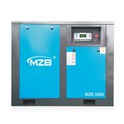

As a supplier of screw air compressors, I've witnessed firsthand the diverse needs of our customers, from small workshops to large industrial complexes. One question that frequently arises is: What is the difference between a small - scale and a large - scale screw air compressor? In this blog, I'll delve into the key distinctions to help you make an informed decision when it comes to choosing the right compressor for your specific requirements.
Capacity and Output
The most obvious difference between small - scale and large - scale screw air compressors lies in their capacity and output. Small - scale screw air compressors typically have a lower air delivery rate, usually ranging from a few cubic feet per minute (CFM) to around 30 CFM. These compressors are ideal for applications with relatively low air demand, such as small workshops, dental offices, or home garages. They can power tools like nail guns, airbrushes, and small pneumatic wrenches efficiently.
On the other hand, large - scale screw air compressors are designed to handle much higher air demands. Their air delivery rate can range from 30 CFM to several hundred CFM or even more. These compressors are commonly used in large manufacturing plants, automotive assembly lines, and other industrial settings where a continuous and high - volume supply of compressed air is required. For instance, in a large automotive manufacturing plant, large - scale compressors are used to power robotic arms, paint sprayers, and other pneumatic equipment that demand a significant amount of compressed air.
Physical Size and Installation
Another significant difference is the physical size of the compressors. Small - scale screw air compressors are generally compact and lightweight, making them easy to install and move around. They can often be placed on a workbench or a small stand, and they don't require a large amount of space. This portability makes them a great choice for small businesses or DIY enthusiasts who may need to relocate their compressor from time to time.
Large - scale screw air compressors, however, are much larger and heavier. They usually require a dedicated room or a large area for installation. In addition to the compressor itself, there may also be associated equipment such as air dryers, filters, and storage tanks, which further increase the space requirements. The installation process for large - scale compressors is also more complex and may require professional installation to ensure proper operation and safety.


Power Consumption and Efficiency
Power consumption is an important consideration when choosing a screw air compressor. Small - scale compressors typically have lower power requirements, as they are designed to operate at a lower capacity. They usually run on single - phase power, which is commonly available in residential and small commercial settings. This makes them more energy - efficient for applications with low air demand, as they consume less electricity.
Large - scale screw air compressors, due to their high capacity and output, require more power. They often operate on three - phase power, which provides a more stable and efficient power supply for heavy - duty applications. While large - scale compressors consume more electricity overall, modern large - scale models are designed with advanced technologies to improve energy efficiency. For example, some large - scale compressors use variable speed drive (VSD) technology, which allows the compressor to adjust its speed according to the actual air demand, reducing energy consumption during periods of low demand. You can learn more about Three Phase Screw Air Compressor on our website.
Cost
The cost of a screw air compressor is closely related to its size and capacity. Small - scale screw air compressors are generally more affordable, both in terms of the initial purchase price and the long - term operating costs. They are a cost - effective solution for small businesses or individuals with limited budgets. The maintenance costs for small - scale compressors are also relatively low, as they have fewer components and require less frequent servicing.
Large - scale screw air compressors, on the other hand, have a higher upfront cost. The purchase price of a large - scale compressor can be several times that of a small - scale model. In addition to the purchase price, there are also higher installation costs, energy costs, and maintenance costs. However, for large industrial applications, the benefits of having a reliable and high - capacity compressor often outweigh the higher costs.
Noise Level
Noise is another factor to consider, especially in environments where noise can be a nuisance. Small - scale screw air compressors are generally quieter than large - scale ones. They are designed with noise - reducing features such as sound - insulated enclosures and low - noise motors. This makes them suitable for use in small workshops or offices where a quiet working environment is desired.
Large - scale screw air compressors, due to their high - power operation and larger size, tend to produce more noise. To mitigate the noise, large - scale compressors are often installed in sound - proof rooms or equipped with additional noise - reducing devices. However, even with these measures, the noise level of large - scale compressors can still be relatively high compared to small - scale models.
Applications
The applications of small - scale and large - scale screw air compressors vary significantly based on their capabilities. Small - scale compressors are commonly used in light - duty applications such as:
- Woodworking: Powering pneumatic nail guns and staplers for assembling furniture or cabinets.
- Dental Offices: Providing compressed air for dental tools like drills and air syringes.
- Home DIY Projects: Operating airbrushes for painting models or small objects, and powering air - powered impact wrenches for automotive repairs.
Large - scale screw air compressors are used in heavy - duty industrial applications, including:
- Manufacturing: Powering pneumatic machinery in factories for processes such as metal stamping, plastic injection molding, and packaging.
- Mining: Supplying compressed air for drilling equipment, ventilation systems, and other underground operations.
- Oil and Gas: Used in refineries and offshore platforms for various pneumatic control systems and equipment. You can explore more about Industrial Use Screw Air Compressor on our website.
Maintenance and Service
Maintenance requirements also differ between small - scale and large - scale screw air compressors. Small - scale compressors are relatively easy to maintain. They usually have simple maintenance procedures, such as regular oil changes, filter replacements, and checking for air leaks. These maintenance tasks can often be performed by the user without the need for professional assistance.
Large - scale screw air compressors, however, require more comprehensive and frequent maintenance. They have more complex components and systems, and any malfunction can have a significant impact on the production process. Therefore, regular professional maintenance is essential to ensure the reliable operation of large - scale compressors. This may include tasks such as inspecting and servicing the compressor's internal components, checking the alignment of the drive system, and monitoring the performance of the associated equipment.
In conclusion, the choice between a small - scale and a large - scale screw air compressor depends on your specific needs, including the air demand, available space, power supply, budget, and application requirements. As a supplier of Screw Type Air Compressor, we have a wide range of products to meet different customer needs. Whether you are a small business owner looking for a compact and affordable compressor or a large industrial enterprise in need of a high - capacity and reliable solution, we can provide you with the right product and professional advice. If you have any questions or would like to discuss your specific requirements, please feel free to contact us for a detailed consultation and procurement negotiation.
References
- Compressed Air and Gas Institute (CAGI). Standards and guidelines for screw air compressors.
- Manufacturer's manuals and technical specifications for screw air compressors.