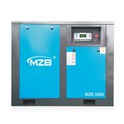

As a supplier of Belt Driven Air Compressors, I've witnessed firsthand the critical role that belt speed plays in the performance of these machines. Belt driven air compressors are widely used in various industries due to their efficiency, reliability, and versatility. In this blog, I'll delve into the influence of belt speed on the performance of a belt driven air compressor, exploring both the positive and negative impacts.
1. Understanding Belt Driven Air Compressors
Before we discuss the influence of belt speed, let's briefly understand how belt driven air compressors work. These compressors use a belt to transfer power from the motor to the compressor pump. The belt connects the motor pulley to the pump pulley, allowing the motor to drive the pump and compress air. The design of belt driven air compressors offers several advantages, such as flexibility in speed adjustment, reduced vibration, and ease of maintenance.
2. Positive Influences of Appropriate Belt Speed
2.1 Efficiency
One of the primary benefits of maintaining an appropriate belt speed is improved efficiency. When the belt speed is optimized, the compressor pump can operate at its designed capacity, ensuring that air is compressed effectively. A well - adjusted belt speed allows the motor to transfer power to the pump with minimal losses. For example, if the belt speed is set correctly for a 70L Tank 3HP Belt Driven Air Compressor, the compressor can fill the tank in a shorter time, consuming less energy in the process. This not only reduces operating costs but also enhances the overall productivity of the compressor.
2.2 Compressor Life
Proper belt speed also contributes to the longevity of the air compressor. When the belt speed is within the recommended range, the components of the compressor, such as the bearings, pistons, and valves, experience less stress. For instance, a stable belt speed ensures that the pistons move smoothly within the cylinders, reducing wear and tear. This is particularly important for 3Kw Heavy Duty Belt Driven Air Compressor which are often used in demanding industrial applications. By reducing the stress on the components, the compressor is less likely to experience breakdowns, resulting in lower maintenance costs and a longer service life.
2.3 Noise and Vibration Reduction
An appropriate belt speed helps in reducing noise and vibration levels. When the belt is running at the right speed, the compressor operates more smoothly. The balanced operation of the compressor reduces the amount of noise generated during the compression process. This is beneficial in work environments where noise pollution is a concern. For example, in a workshop where multiple machines are in operation, a quieter air compressor can create a more comfortable working environment for the operators.
3. Negative Influences of Incorrect Belt Speed
3.1 Overheating
If the belt speed is too high, the compressor pump may overheat. A high - speed belt can cause the pump to work harder than it is designed to, generating excessive heat. Overheating can damage the internal components of the compressor, such as the gaskets and seals. For a 3 Cylinder 3Kw Belt Driven Air Compressor, overheating can lead to a loss of compression efficiency and even permanent damage to the cylinders. Continuous overheating can also cause the belt itself to deteriorate more quickly, increasing the risk of belt failure.
3.2 Reduced Compression Efficiency
On the other hand, if the belt speed is too low, the compressor may not be able to compress air effectively. The pump may not be able to draw in and compress enough air to meet the demand. This results in reduced air pressure and flow rate, which can be a significant problem in applications where a consistent supply of compressed air is required. For example, in pneumatic tools, a low - pressure air supply can cause the tools to operate inefficiently or even malfunction.
3.3 Belt Slippage
Incorrect belt speed can also lead to belt slippage. If the belt speed is too high, the belt may slip on the pulleys due to the excessive force. Belt slippage not only reduces the power transfer efficiency but also causes wear on the belt and pulleys. Over time, the belt may become loose or damaged, requiring replacement. Belt slippage can also cause the compressor to operate erratically, affecting the quality of the compressed air.
4. Factors Affecting Belt Speed Selection
Several factors need to be considered when selecting the appropriate belt speed for a belt driven air compressor.
4.1 Compressor Design
The design of the compressor, including the size of the motor and pump, the number of cylinders, and the intended application, plays a crucial role in determining the optimal belt speed. Different compressor models have different speed requirements based on their design specifications. For example, a larger compressor with more cylinders may require a different belt speed compared to a smaller, single - cylinder compressor.
4.2 Load Requirements
The load requirements of the application also influence the belt speed selection. If the compressor is used for light - duty applications, such as powering small pneumatic tools, a lower belt speed may be sufficient. However, for heavy - duty applications, such as industrial manufacturing processes, a higher belt speed may be necessary to meet the increased air demand.
4.3 Environmental Conditions
Environmental conditions, such as temperature and humidity, can affect the performance of the belt and the compressor. In hot and humid environments, the belt may expand, which can change the belt speed. In such cases, the belt tension may need to be adjusted regularly to maintain the correct belt speed.
5. Maintaining the Right Belt Speed
To ensure that the belt driven air compressor operates at its best, it is essential to maintain the right belt speed. Regular inspection and adjustment of the belt tension are necessary. The belt tension should be checked according to the manufacturer's recommendations. Additionally, the pulleys should be inspected for wear and alignment. Misaligned pulleys can cause the belt to run at an incorrect speed and increase the risk of belt failure.
6. Conclusion and Call to Action
In conclusion, the belt speed has a significant influence on the performance of a belt driven air compressor. An appropriate belt speed can improve efficiency, extend the compressor's life, and reduce noise and vibration. On the other hand, incorrect belt speed can lead to overheating, reduced compression efficiency, and belt slippage. As a supplier of high - quality belt driven air compressors, we understand the importance of belt speed in ensuring the optimal performance of our products.
If you are in the market for a belt driven air compressor or need advice on maintaining the right belt speed for your existing compressor, we are here to help. Our team of experts can provide you with detailed information and guidance to meet your specific needs. Contact us today to start a discussion about your air compressor requirements and take advantage of our top - notch products and services.


References
- Compressor Handbook, McGraw - Hill
- Industrial Air Compressor Technology, Wiley - Interscience