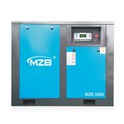

When it comes to industrial equipment, understanding the long - term costs is crucial for businesses. As a supplier of Permanent Magnet Air Compressors, I've seen firsthand how these machines can bring efficiency and performance to various operations. In this blog, I'll delve into the lifetime maintenance costs of permanent magnet air compressors, providing insights that can help you make an informed decision for your business.
Initial Investment and Its Impact on Maintenance
The first thing to consider is the initial purchase price of a permanent magnet air compressor. These compressors are often more expensive upfront compared to traditional models. However, this higher cost is offset by their energy - efficient design. Permanent magnet motors in these compressors have a higher power density and lower energy consumption, which can lead to significant savings in the long run.
For example, the MZB Permanent Magnet Air Compressor 220v Oil Free is a great option for small - scale operations. Its oil - free design not only reduces the risk of oil contamination in the compressed air but also simplifies maintenance. The initial investment in such a compressor might seem steep, but the reduced energy bills and lower maintenance requirements over its lifetime make it a cost - effective choice.
Components and Their Maintenance Requirements
Permanent magnet air compressors consist of several key components, each with its own maintenance needs.
1. Permanent Magnet Motor
The heart of the compressor is the permanent magnet motor. These motors are known for their high efficiency and reliability. However, they still require some level of maintenance. Regularly checking the motor's temperature, vibration, and electrical connections is essential. Over time, the bearings in the motor may wear out and need replacement. This is a relatively straightforward maintenance task, but it should be done by a qualified technician to ensure proper installation and alignment.
2. Air End
The air end is responsible for compressing the air. It is a critical component that requires careful maintenance. The air filters need to be replaced regularly to prevent dust and debris from entering the air end. A clogged air filter can increase the load on the compressor, leading to higher energy consumption and potential damage to the air end. Additionally, the lubricant (if the compressor is oil - lubricated) needs to be changed at recommended intervals. For oil - free compressors like the Permanent Magnet Variable Frequency Oil Free Noiseless Air Compressor 30 Liter, the focus is more on keeping the internal components clean and free from wear.
3. Cooling System
Proper cooling is vital for the efficient operation of the compressor. The cooling system, whether it's an air - cooled or water - cooled system, needs to be maintained. In an air - cooled system, the cooling fins should be cleaned regularly to ensure proper heat dissipation. In a water - cooled system, the water quality needs to be monitored, and the pipes should be checked for leaks and blockages.
Frequency of Maintenance
The frequency of maintenance depends on several factors, such as the operating environment, the usage intensity, and the specific model of the compressor. In general, light - duty compressors used in a clean environment may require less frequent maintenance compared to heavy - duty compressors operating in a dusty or humid environment.
For daily use, it's recommended to perform visual inspections of the compressor, checking for any signs of leaks, unusual noises, or vibrations. Weekly or monthly checks may include inspecting the air filters, lubricant levels (if applicable), and the cooling system. More in - depth maintenance tasks, such as bearing replacement or major component overhauls, may be required every few years.
Cost - Saving Maintenance Strategies
As a supplier, I always recommend implementing cost - saving maintenance strategies to our customers.
1. Preventive Maintenance
Preventive maintenance is the key to reducing long - term maintenance costs. By following the manufacturer's recommended maintenance schedule, you can catch potential problems early and prevent them from turning into major breakdowns. This not only saves on repair costs but also minimizes downtime, which can be costly for businesses.
2. Training and Education
Providing training to your maintenance staff on the proper operation and maintenance of the compressor can go a long way. Well - trained staff can perform routine maintenance tasks more efficiently and can also identify early signs of problems. This can lead to better - informed decisions regarding maintenance and repair, ultimately saving money.
3. Using Genuine Parts
When it's time to replace components, using genuine parts is essential. Genuine parts are designed specifically for your compressor model, ensuring proper fit and performance. While they may be more expensive than aftermarket parts, they offer better reliability and can extend the lifespan of your compressor, reducing overall maintenance costs.
Case Study: Lifetime Maintenance Cost Comparison
Let's take a look at a case study comparing a permanent magnet air compressor with a traditional air compressor over a 10 - year period.
We'll assume a medium - sized manufacturing plant that operates its compressor for 2,000 hours per year. The initial cost of the permanent magnet air compressor is $15,000, while the traditional compressor costs $10,000.
Over the 10 - year period, the permanent magnet compressor has lower energy consumption, saving approximately $5,000 per year in electricity bills. The maintenance costs for the permanent magnet compressor, including filter replacements, bearing changes, and occasional lubricant changes (if applicable), amount to around $2,000 per year.
The traditional compressor, on the other hand, has higher energy consumption, resulting in electricity bills that are $3,000 more per year compared to the permanent magnet compressor. Its maintenance costs are also higher, around $3,500 per year, due to more frequent component replacements and higher wear and tear.
After 10 years, the total cost of ownership for the permanent magnet compressor is $15,000 (initial cost)+ $2,000 x 10 (maintenance cost) - $5,000 x 10 (energy savings) = $ - 15,000 (a net gain considering energy savings). For the traditional compressor, the total cost of ownership is $10,000 (initial cost)+ $3,500 x 10 (maintenance cost)+ $3,000 x 10 (additional energy cost)= $75,000.
This case study clearly shows that although the initial investment in a permanent magnet air compressor is higher, the long - term savings in energy and maintenance costs make it a more economical choice.
Conclusion and Call to Action
In conclusion, the lifetime maintenance cost of a permanent magnet air compressor is influenced by various factors, including the initial investment, component maintenance requirements, frequency of maintenance, and cost - saving strategies. While the upfront cost may be higher, the energy efficiency and lower long - term maintenance needs of these compressors make them a smart investment for businesses.
If you're considering purchasing a permanent magnet air compressor for your operation, I encourage you to explore our range of products, such as the Permanent Magnet Variable Frequency Oil Free Air Compressor 120 Liter. Our team of experts is ready to assist you in selecting the right compressor for your needs and can provide detailed information on maintenance and cost - saving strategies. Contact us today to start a discussion about your procurement needs and take the first step towards a more efficient and cost - effective compressed air solution.


References
- Compressed Air and Gas Institute (CAGI). "Best Practices for Compressed Air System Maintenance."
- Manufacturer's manuals for permanent magnet air compressors.