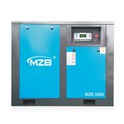

As a supplier of Direct Driven Air Compressors, I often encounter questions from customers about the pressure switch setting of these machines. In this blog, I'll delve into what the pressure switch setting of a direct driven air compressor is, why it's important, and how to properly adjust it.
Understanding the Basics of a Direct Driven Air Compressor
Before we discuss the pressure switch setting, let's briefly understand what a direct driven air compressor is. A direct driven air compressor is a type of compressor where the motor is directly connected to the pump. This design eliminates the need for belts or pulleys, resulting in a more compact and efficient machine. Our Efficient Direct Driven Air Compressor is a prime example of such a compressor, offering high performance and reliability.
What is the Pressure Switch in an Air Compressor?
The pressure switch in an air compressor is a crucial component that controls the operation of the compressor. It monitors the air pressure inside the compressor's tank and automatically starts or stops the compressor motor based on pre - set pressure levels. This ensures that the compressor does not over - pressurize the tank, which could be dangerous, and also prevents the motor from running continuously, which would waste energy and potentially damage the compressor.
Pressure Switch Setting: Cut - In and Cut - Out Pressures
The pressure switch setting typically consists of two key values: the cut - in pressure and the cut - out pressure.
- Cut - In Pressure: This is the pressure level at which the compressor motor starts running. When the air pressure in the tank drops to the cut - in pressure, the pressure switch sends a signal to the motor to start, and the compressor begins to fill the tank with air. For example, in our 2.2Kw Portable Dierct Driven Air Compressor, a common cut - in pressure might be set around 80 psi (pounds per square inch).
- Cut - Out Pressure: This is the pressure level at which the compressor motor stops running. Once the air pressure in the tank reaches the cut - out pressure, the pressure switch signals the motor to stop. A typical cut - out pressure for many direct driven air compressors is around 125 psi. However, these values can vary depending on the specific model and application of the compressor.
Importance of Proper Pressure Switch Setting
Proper pressure switch setting is essential for several reasons:
- Safety: Over - pressurization of the compressor tank can lead to serious safety hazards, such as tank rupture. By setting the cut - out pressure correctly, we ensure that the tank pressure never exceeds a safe level.
- Energy Efficiency: If the cut - in and cut - out pressures are not set properly, the compressor may run more frequently than necessary, wasting energy. For instance, if the cut - in pressure is set too high, the compressor will start too soon, and if the cut - out pressure is set too low, it will stop too early, resulting in inefficient operation.
- Equipment Longevity: Incorrect pressure switch settings can put unnecessary stress on the compressor motor and other components, leading to premature wear and tear. By setting the pressures correctly, we can extend the lifespan of the compressor.
How to Adjust the Pressure Switch Setting
Adjusting the pressure switch setting of a direct driven air compressor should be done with caution. Here are the general steps:


- Safety First: Before making any adjustments, make sure the compressor is turned off and unplugged from the power source. Release all the air pressure from the tank by opening the drain valve.
- Locate the Pressure Switch: The pressure switch is usually located near the compressor tank and is connected to the pressure gauge and the motor.
- Identify the Adjustment Screws: Most pressure switches have two adjustment screws. One screw is used to adjust the cut - in pressure, and the other is used to adjust the cut - out pressure. The screw for the cut - out pressure is often larger and labeled as such.
- Make Small Adjustments: To increase the cut - in or cut - out pressure, turn the corresponding adjustment screw clockwise. To decrease the pressure, turn the screw counter - clockwise. Make small adjustments at a time, and then test the compressor to see how the new settings work.
- Test the Compressor: After making an adjustment, plug in the compressor and turn it on. Observe the pressure gauge as the tank fills with air. Note the pressure at which the compressor starts (cut - in) and stops (cut - out). If the settings are not correct, make further adjustments until the desired pressures are achieved.
Factors Affecting Pressure Switch Setting
Several factors can influence the optimal pressure switch setting for a direct driven air compressor:
- Application Requirements: Different applications require different air pressures. For example, if you are using the compressor for painting, a lower pressure (around 30 - 50 psi) may be sufficient. However, if you are using it for heavy - duty pneumatic tools like jackhammers, a higher pressure (up to 150 psi) may be needed.
- Compressor Capacity: The size and capacity of the compressor also play a role. Larger compressors with bigger tanks can handle higher pressures and may require different settings compared to smaller, portable models like our Portable Direct Driven Air Compressor.
Conclusion
In conclusion, the pressure switch setting of a direct driven air compressor is a critical aspect of its operation. By understanding the cut - in and cut - out pressures, the importance of proper setting, and how to adjust them, you can ensure the safe, efficient, and long - lasting performance of your compressor.
If you are in the market for a high - quality direct driven air compressor or have any questions about pressure switch settings, we are here to help. Our team of experts can provide you with detailed information and guidance to meet your specific needs. Contact us today to start a conversation about your air compressor requirements and let's find the perfect solution together.
References
- Compressed Air Systems Handbook, 2nd Edition
- Industrial Air Compressor Guide, published by the Compressed Air and Gas Institute